Dragonfly Director Elaway Attends the 2026 Wisdom & Action Forum
Dragonfly Director Elaway Attends the 2026 Wisdom & Action Forum
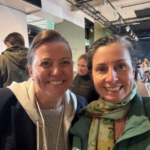
Dragonfly Director Elaway Dalby-Ball has just attended the 2026 Wisdom & Action Forum in Melbourne, run by the Small Giants Academy. The focus this year – Artificial Intelligence (AI).
Living in an age where technology touches so many aspects of our lives, the conference brought together diverse voices and perspectives to discuss how we can safeguard human connection, relationships, and the integrity of society as technology reaches ever deeper into our lives.
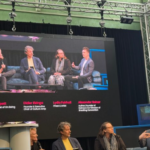
The first session, hosted by Small Giants Academy, was a panel discussion featuring Andrew Pask, Arabella Eyre, Caroline Chubb Calderon, and Dave Ritter, in which they explored a compelling question: Can AI help regenerate Earth’s living systems?
Here are Elaway’s Four Key Takeaways:
1. Rethink what “intelligence” means
Rather than labelling AI as “superintelligent,” we should adopt broader concepts like “super-cognitive” — recognising that true intelligence includes empathy, accountability, and awareness of relationships, qualities present in living systems but often absent from AI models.
2. AI shows real promise for conservation, but technology alone isn’t enough
AI is already being used to model gene sequences, assess habitat suitability, and potentially restore threatened species. However, technological capability must be paired with viable habitat, ecological balance, and consultation with Traditional Custodians — otherwise it risks repeating the patterns that caused decline in the first place.
3. Success must be measured by living systems, not outputs
Metrics need to shift away from numbers of animals bred or released toward viable, self-sustaining populations in functioning ecosystems. The core question should always be: does it actually regenerate life?
4. AI is only as good as the values it’s built on
If AI is trained on extractive, competitive, and short-term human behaviours, it will amplify those patterns at scale. To genuinely support regeneration, AI must be grounded in ecological principles — reciprocity, interdependence, and resilience — and informed by Indigenous knowledge that sees humans as part of, not separate from, the living world.
If AI is to genuinely support ecosystem regeneration, two conditions are essential.
Firstly, nature and kinship must be at the core. AI must be grounded in an understanding that humans are part of interconnected living systems. This includes incorporating Indigenous knowledge systems and ecological relationships into its foundations.
We must also align with earth-based principles. Decision-making frameworks must reflect principles such as reciprocity, resilience, diversity, and long-term system health, rather than optimising for efficiency or profit. In practical terms, this could mean AI supporting restoration planning, identifying habitat corridors in urban areas, modelling climate resilience, and enhancing biodiversity outcomes, guided by ecological wisdom.
AI has extraordinary potential.
The question is not simply whether it can regenerate Earth’s systems, but whether we are willing to reshape their foundations so that they serve life, rather than merely extending the patterns that have placed those systems at risk.
If you’d like to discuss how AI can make a positive difference to your next environmental project, get in touch.
To learn more about the conference, head to www.wisdomandaction.com.au